 Following our expansion into South Africa, Ireland, Switzerland and Italy, we are taking our next steps into Spain, Cyprus and the Maldives.
Environmental conservation does not stop at national borders, and neither should our participation in the decisions that shape environmental protection. Over recent months, Merman Conservation Expeditions Ltd has been gradually expanding its international involvement in environmental public consultations, wildlife conservation policy and evidence-informed environmental decision-making. What began with our participation in environmental consultations in the United Kingdom, European Union and later in Greece has developed into a broader international initiative. Our first major step beyond our established European engagement was South Africa, followed by the expansion of our consultation activities into Ireland, Switzerland and Italy. We are now preparing the next stage of this development by adding Spain, Cyprus and the Maldives to our international consultation coverage. Our objective is not simply to increase the number of countries in which we participate. It is to use our knowledge and experience in environmental consultancy, marine biology, wildlife research and biodiversity conservation to contribute to better environmental decisions wherever meaningful opportunities exist. Our First International Step: South Africa. South Africa holds particular significance for our organisation. In 2019, before the establishment of Merman Conservation Expeditions Ltd, our founder travelled to South Africa for a shark research internship. This experience provided valuable insights into the country's marine biodiversity, conservation challenges, and the relationship between wildlife protection, scientific research, and local communities. South Africa is home to remarkable marine and terrestrial ecosystems. However, the country also faces substantial environmental pressures involving fisheries, wildlife management, coastal development and protected areas. Our expansion into South African public consultations began with the proposed shark nets and drumlines at Tinley Manor Beach in KwaZulu-Natal. This subject was especially relevant to our interests in shark conservation, non-lethal management alternatives and the ecological consequences of shark-control programmes. Our engagement subsequently expanded to other environmental matters, including proposals for protected environments and biodiversity conservation. South Africa demonstrated something important to us: even when an environmental consultancy is based in another country, it can contribute meaningfully to environmental discussions through evidence-based recommendations, provided the relevant participation requirements are respected. That experience encouraged us to look more closely at opportunities in other countries. The Next Chapter: Ireland, Switzerland and Italy. Following South Africa, we extended our environmental consultation engagement to three additional European countries. Although geographically closer to our existing activities, each offers different environmental challenges, regulatory systems and conservation opportunities. Ireland: Protecting Marine and Coastal Environments. Ireland was a natural extension of our existing work in the United Kingdom and European Union. Surrounded by the Atlantic Ocean and the Irish Sea, Ireland has extensive marine habitats, important fisheries and coastal ecosystems that face pressures from human activities and climate change. Our interest in Ireland focuses on marine biodiversity, environmental assessments, offshore infrastructure and the sustainable management of natural resources. One particularly relevant area is the development of offshore renewable energy infrastructure. Offshore energy is important for reducing carbon emissions, but its development must also consider marine habitats, sensitive species, underwater noise and the cumulative impacts of multiple projects. Our engagement with Ireland includes environmental consultation processes such as EirGrid's Powering Up Offshore South Coast project. We believe renewable energy development and biodiversity conservation should not be treated as competing objectives. With proper planning, scientific assessment and monitoring, both can be advanced responsibly. Ireland also offers opportunities to contribute to fisheries management, protected area planning and marine conservation policy. Switzerland: Bringing Conservation into Land and Forest Management. Switzerland represents a different direction for Merman Conservation. Unlike our predominantly marine-focused consultation activities, Switzerland provides opportunities to engage with terrestrial biodiversity, forests, mountain ecosystems and landscape management. Swiss forests perform several important functions. They provide wildlife habitats, protect communities from natural hazards, support timber production and offer recreational opportunities. These functions can create difficult management decisions, particularly where biodiversity conservation, infrastructure, public safety and economic activities overlap. Our interest includes forest protection, habitat connectivity, ecological restoration and sustainable forest management. Through Swiss forest-planning consultation processes, we have examined issues including the protective functions of forests, timber production, recreation and biodiversity habitats. Switzerland is particularly interesting because it demonstrates how environmental management must consider several ecosystem services simultaneously. Protecting nature is not always a matter of excluding human activity. Effective conservation often requires identifying where human activities can continue sustainably and where stronger protection or restoration is needed. Italy: Strengthening Mediterranean Biodiversity and Landscape Protection. Italy was another logical choice because of its Mediterranean ecosystems and its close environmental connections with Greece. The two countries share many ecological challenges, including coastal development, marine biodiversity loss, invasive species, habitat fragmentation and the impacts of climate change. Italy also has diverse terrestrial landscapes, from Alpine ecosystems to Mediterranean forests, wetlands and coastal habitats. Our consultation interests include marine protection, biodiversity management, sustainable fisheries, environmental impact assessments and landscape planning. An important area of interest is regional planning, where decisions about land use, development and conservation can influence biodiversity for decades. For example, the Emilia-Romagna regional landscape planning process provides an opportunity to examine how natural habitats, landscapes and human activities are considered in territorial policies. Italy's environmental consultation framework also offers opportunities to contribute to implementing and improving European environmental legislation at national and regional levels. For Merman Conservation, expanding into Italy strengthens our ability to engage with Mediterranean environmental challenges across different countries. Our New Expansion: Spain, Cyprus and the Maldives. Building on our activities in South Africa, Ireland, Switzerland and Italy, we are now extending our consultation coverage to three further countries. Each was selected because of its environmental significance and its relevance to our research interests and conservation priorities. Spain: Connecting Atlantic and Mediterranean Conservation. Spain occupies an important position in European marine conservation because it has coastlines along both the Atlantic Ocean and the Mediterranean Sea, as well as the ecologically significant Canary Islands. Its marine environments support fisheries, migratory species, coastal habitats and a wide variety of marine wildlife. Our priorities for Spain include:
Spain also provides an opportunity to examine different conservation approaches within European and Mediterranean policy frameworks. We are particularly interested in how national and regional management decisions can contribute to broader marine biodiversity objectives. Cyprus: Addressing Eastern Mediterranean Environmental Challenges. Cyprus is especially relevant to our existing marine research and biodiversity monitoring interests in Greece. The Eastern Mediterranean is undergoing substantial ecological change, including warming sea temperatures, the spread of non-indigenous marine species and increasing coastal pressures. These challenges are not confined to individual countries. Marine ecosystems are interconnected, and changes affecting Cyprus may also have implications for Greece and other Mediterranean regions. Our priorities include:
Our experience with Mediterranean biodiversity monitoring provides a useful foundation for examining comparable environmental issues in Cyprus. We believe cooperation and shared scientific evidence are particularly important for addressing ecological challenges across the Eastern Mediterranean. Maldives: A New Step into Indian Ocean Conservation. The Maldives represents an important geographical development for our organisation. While our previous consultation expansion has focused primarily on Europe and Africa, the Maldives introduces opportunities for environmental policy engagement in the Indian Ocean. The country is internationally recognised for its coral reefs, marine biodiversity and dependence on healthy marine ecosystems. However, these ecosystems face increasing threats from climate change, coral bleaching, coastal development, pollution and unsustainable resource use. Our primary interests include:
The Maldives is particularly important because environmental conservation is directly linked to economic stability and community wellbeing. Healthy coral reefs support fisheries, tourism, coastal protection and local livelihoods. For us, expanding into the Maldives is not about transferring European conservation policies to another region. It is about examining local environmental challenges, respecting national priorities and contributing scientific knowledge where public participation is appropriate and beneficial. Why Are We Expanding Environmental Consulting Internationally? Our international expansion is based on a simple principle: Environmental knowledge should contribute to environmental decisions, regardless of national boundaries. Governments regularly review legislation, prepare environmental management plans, evaluate development projects and consult the public about proposed environmental measures. These processes can influence biodiversity conservation for many years. However, public consultations are not always supported by sufficient scientific evidence or broad professional participation. Environmental consultants, researchers and conservation practitioners have an opportunity to contribute by examining available evidence, identifying ecological risks and proposing practical improvements. Our approach is based on independent, evidence-informed environmental assessment. We do not believe that every environmental proposal should automatically be supported or rejected. Some proposals provide genuine conservation benefits. Others require stronger safeguards, additional research, improved monitoring or more effective enforcement. Our responsibility is to assess them carefully and provide constructive, scientifically informed recommendations. Using Technology and AI to Support Our International Work. Expanding into additional countries also requires more effective ways to monitor consultation opportunities, examine documentation and manage submissions. This is where technology and artificial intelligence are becoming increasingly useful in our organisation. Our evolving AI-supported consulting system helps us organise consultation opportunities, identify deadlines, review technical documents and prepare structured draft responses. These tools are particularly valuable when dealing with different countries, languages, regulatory frameworks and environmental subjects. However, technology does not replace professional judgement. Our consultation positions must remain grounded in scientific evidence, relevant expertise and human review. AI can improve the efficiency of our workflow, but the responsibility for the recommendations we submit remains with our organisation. By combining technological tools with conservation knowledge, we aim to make international participation more manageable while maintaining the quality and independence of our environmental work. Building a More International Conservation Perspective. Our growing consultation coverage now includes: Established and previously expanded engagement:
Together, these jurisdictions provide opportunities to examine environmental challenges across Europe, Africa and Asia. They also allow us to compare how different countries approach similar problems, including habitat degradation, fisheries management, wildlife protection and environmental impact assessment. We recognise that each country has its own environmental priorities, legal framework and local expertise. Our role is not to replace local voices or impose external solutions. Instead, we aim to contribute constructively, learn from different approaches and support decisions that are environmentally responsible and scientifically defensible. Our Next Steps. During the next stage of our expansion, we intend to strengthen our monitoring of public consultations in Spain, Cyprus and the Maldives, while continuing our engagement in the countries where we are already active. Our priorities will remain focused on biodiversity conservation, sustainable fisheries, protected areas, environmental impact assessments, wildlife management and ecological restoration. Where relevant consultation opportunities arise, we will examine the supporting documentation, evaluate the available evidence and prepare professional submissions. We will also continue improving our internal consultation tracking and AI-assisted research workflows to support increasingly international operations. Conservation Beyond Borders. The expansion of Merman Conservation Expeditions Ltd reflects our belief that scientific knowledge should not remain limited to research reports, field observations, or academic discussions. It should also contribute to the decisions that determine how natural environments are managed. From marine conservation challenges in South Africa to forest management in Switzerland, offshore environmental planning in Ireland, Mediterranean biodiversity in Italy, Spain and Cyprus, and coral reef protection in the Maldives, the issues may differ, but our purpose remains the same. We want scientific evidence to play a stronger role in environmental decision-making. If we want better wildlife protection, stronger environmental legislation and more sustainable use of natural resources, we must participate in the processes that shape those decisions. That is why we continue to expand our environmental consultation engagement internationally. And that is the direction we intend to pursue in the years ahead. At Merman Conservation, we understand the importance of ensuring that renewable energy projects not only contribute to the environment but also create lasting social and economic benefits for local communities. As part of our commitment to sustainable development, we participated in the recent consultation on community benefits from onshore and offshore renewable energy developments. We believe that as the renewable energy landscape evolves, with technologies like wind, solar, and hydrogen playing an increasingly vital role, it’s crucial that communities—especially those in rural, island, and coastal areas—are adequately supported. Community benefit schemes are an opportunity to share the success of these developments with those who host them, ensuring that the wealth generated from renewable energy is reinvested back into local economies. Our views are focused on the need for fairness and transparency in how community benefits are distributed. Developers should prioritize engaging with local communities early in the process and design benefit packages that reflect their specific needs and priorities. This includes ensuring that both smaller and larger communities have equal access to opportunities, with measures in place to address any barriers, such as limited access to finance or capacity in remote areas. We also strongly support the idea of updating the Good Practice Principles to reflect the diverse and changing landscape of renewable energy, while ensuring that all communities—especially those most impacted by energy developments—receive meaningful benefits. By participating in this consultation, we hope to help shape a future where community benefits are an integral part of Scotland’s transition to net-zero energy, benefiting both people and the planet for years to come.  This December, we had the opportunity to contribute to several important consultations that will shape the future of Scotland's environment, transportation, and marine management:
1️⃣ Draft Implementation Plan: Vision for Scotland's Public Electric Vehicle Charging Network We joined the conversation about the future of Scotland’s electric vehicle infrastructure, focusing on sustainable development and accessibility for all. 2️⃣ National Marine Plan 2 Planning Position Statement We provided feedback on Scotland’s updated National Marine Plan (NMP2), aiming to ensure that our seas are managed sustainably, balancing current needs with future challenges. 3️⃣ Environmental Protection (Single-Use Vapes) (Scotland) Regulations 2024 We participated in the consultation on proposed changes to regulations targeting single-use vapes, plastics, cotton buds, and microbeads, and the introduction of fixed penalty notices for offences. These consultations are crucial in shaping policies that protect our environment and ensure a sustainable future for Scotland. We're proud to be part of the process and encourage everyone to stay informed and get involved! #Scotland #PublicConsultation #EnvironmentalProtection #MarinePlanning #ElectricVehicles #Sustainability At Merman Conservation Expeditions Ltd, our mission is to advocate for policies that prioritize environmental sustainability and biodiversity conservation. That’s why we wholeheartedly support the proposed changes to Scottish Government policy, which aim to provide Ramsar sites with the same level of protection as European sites under the Habitats Regulations Appraisal (HRA) process. Why These Changes Matter Ramsar sites are internationally recognized wetlands, essential for preserving biodiversity, mitigating climate change, and supporting local ecosystems. However, despite their importance, the protection measures for these sites have not been as robust as those for European sites. Aligning Ramsar site protections with European standards will:
Supporting this policy change aligns with our core values and long-term vision of protecting ecosystems for future generations. At Merman Conservation Expeditions Ltd, we believe that a stronger framework for Ramsar sites benefits not only wildlife but also communities and industries that rely on healthy ecosystems. Let’s protect what matters. 💚  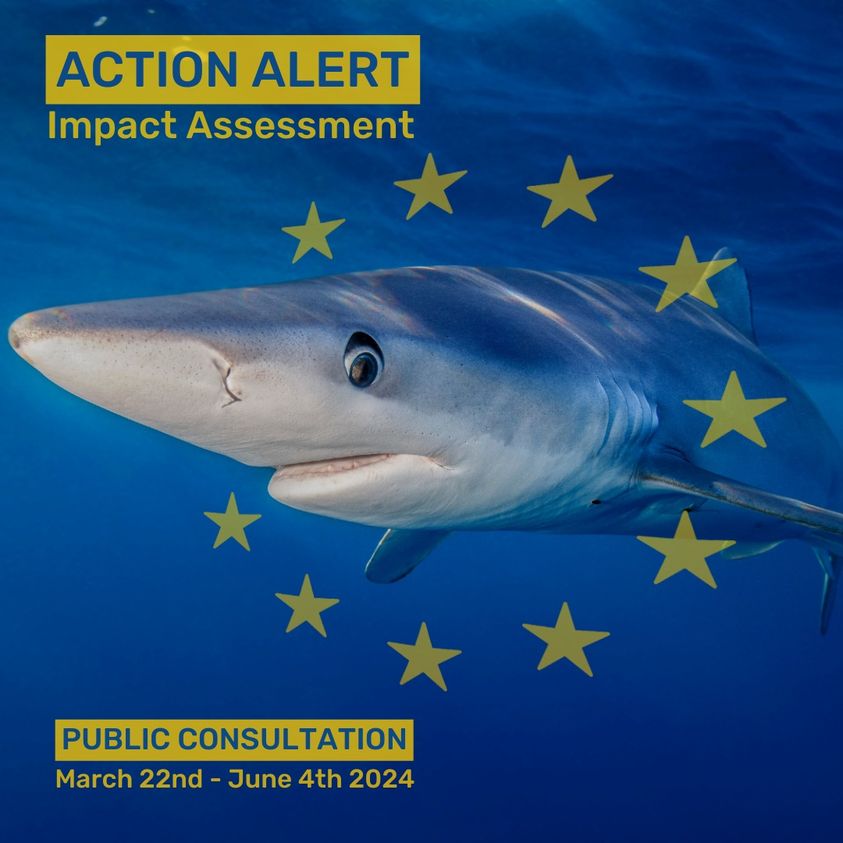 forward movement for the #StopFinEU campaign to end the fin trade in Europe! And this time ANYONE can take action for sharks. All you need is 5 minutes to make a massive impact, here's how...
At this stage the European Commission is accepting public comments via their official questionnaire. This is your opportunity to participate, deadline is June 4th 2024. The questions are focused on policy options. These are loaded questions, so be very careful and read the details below before you begin. This is completely about your opinion, any suggestions we make below are simply that, suggestions. Click the links below if you want to see how Shark Allies answered. To participate, go to this link and create a log in. Here are some overall points that might help you understand and navigate the process: For each question you have six option ranging from VERY POSITIVE to VERY NEGATIVE and NO OPINION. Be aware that the Commission will most likely just tally the results automatically and not carefully consider subtleties you want to express. It’s probably best to be very obvious in your selection. NEUTRAL is a better choice than NO OPINION to show that there is most likely no impact, or there will be negative and positive changes that will balance out. When you read the proposed policy options (#2-7) please keep in mind that they are not asking whether these are good practices to pursue in general (most of them are), but whether this is the one policy solution they should chose (instead of a fin trade ban). So your answers should reflect whether that particular policy option will bring the effect you desire. If you are in favor of a fin trade ban, then policy options #2-5 are completely undesirable, since they would not create any effective change. At best they would be NEUTRAL. Therefore, the environmental impacts would be VERY NEGATIVE (because very little would change and systems keep degrading) and most of the social and economic impacts would be NEUTRAL, because they wouldn’t change much from what they are now (with the exception being tourism and human health). You will see why, as you read on. For guidance on the questionaire in multiple languages, you can follow along at the link below: https://sharkallies.org/eu-action |
IntroFrom conservation initiatives to groundbreaking research, our blog is your portal to the awe-inspiring world of wildlife conservation. Archives
November 2026
Categories
All
|
- Home
- About us
- Blog
-
Citizen Science Projects
- Events / Research
-
Resources
- B2B Apps
- Data Repository
- Digital Library >
- Field Guides >
- Outreach Material
- Podcast
- Publications
- Reporting Forms
- Survey Monitoring Sheets
-
Tools
>
- All AI Tools
- Butterfly ID
- EcoRisk
- Environmental Impact Summary Tool
- European Marine Threat Monitor
- European Wildlife Safety Guide
- Field Notes
- Fish Size Guide
- HookLab
- iNat Battles
- Jackal Vocalization Analyzer
- Jellyfish Drift Predict Tool
- Marine Logbook Assistant
- Marine Weather Insights
- My MPA
- Nest ID
- Species Mapper
- UK Fishing Data Analytics
- Universal Indicator Meter
- WildCare
- Wildlife Academy
- Wildlife Conflict AI Agent Advisor
- Wildlife Photo Renamer
- Wildlife Tracker
- Contact

 RSS Feed
Company
Merman Conservation Expeditions LTDCompany Number: SC787239
Not-for-profit organisation. All revenue is reinvested into field research and conservation. UK Register of Learning Providers Number UKPRN: 10096857 European Commission Funding & Tenders (PIC): 864392318 European Transparency Register: REG 7939380103888-18 ISNI: 0000 0005 2813 2379 Ringgold ID: 841198 |
Contact USFIND US |


|
|
Publish with Marine Notes JournalSubmit your marine research, case studies, and reviews for peer review and open-access publication.
Marine ecology and biodiversity |
|
Copyright © 2023- 2026 Merman Conservation Expeditions Ltd. All rights reserved.
|
- Home
- About us
- Blog
-
Citizen Science Projects
- Events / Research
-
Resources
- B2B Apps
- Data Repository
- Digital Library >
- Field Guides >
- Outreach Material
- Podcast
- Publications
- Reporting Forms
- Survey Monitoring Sheets
-
Tools
>
- All AI Tools
- Butterfly ID
- EcoRisk
- Environmental Impact Summary Tool
- European Marine Threat Monitor
- European Wildlife Safety Guide
- Field Notes
- Fish Size Guide
- HookLab
- iNat Battles
- Jackal Vocalization Analyzer
- Jellyfish Drift Predict Tool
- Marine Logbook Assistant
- Marine Weather Insights
- My MPA
- Nest ID
- Species Mapper
- UK Fishing Data Analytics
- Universal Indicator Meter
- WildCare
- Wildlife Academy
- Wildlife Conflict AI Agent Advisor
- Wildlife Photo Renamer
- Wildlife Tracker
- Contact